 by Webmaster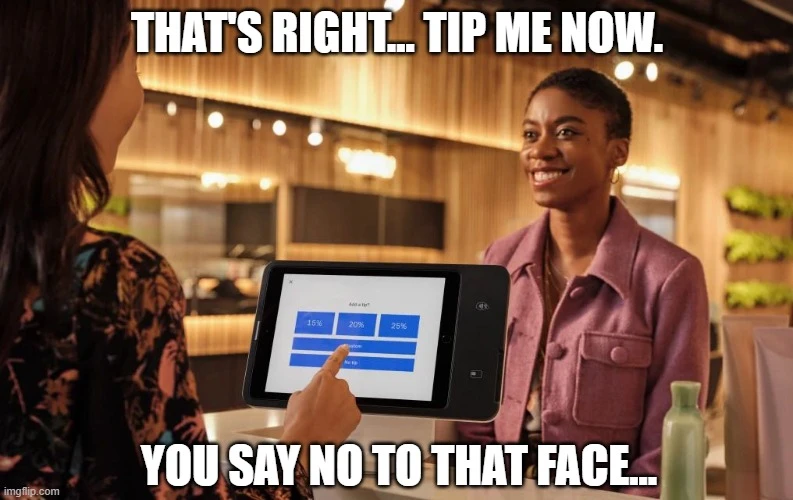
What is tipping, and why does the United States have a tipping culture far beyond most other countries in the world?
Tipping is a practice where customers give an additional sum of money to service workers as a gesture of appreciation for their service. The amount of the tip is typically a percentage of the total cost of the service, and the practice is common in many industries, including restaurants, bars, hotels, and hair salons.
The United States has a tipping culture far beyond most other countries in the world due to a combination of factors. One factor is the low minimum wage for tipped workers in the United States.
Tipped workers in the U.S. are often paid a lower minimum wage than non-tipped workers, with the expectation that they will make up the difference in tips. This creates an economic incentive for customers to tip generously, as they know that their tips directly contribute to the livelihoods of service workers.
Another factor is the history of tipping in the United States. Tipping became popular in the late 19th and early 20th centuries, as a way for wealthy Americans to show off their status and generosity. The practice then spread to other social classes and industries, and became deeply ingrained in American culture.
Finally, the service industry in the United States is highly competitive, and workers are often expected to provide exceptional service in order to earn tips. This creates a culture of customer service that is focused on making customers happy and providing a positive experience, which in turn leads to higher tips.
Overall, the combination of low minimum wages for tipped workers, the history of tipping in the United States, and the competitive service industry has created a tipping culture that is unique to the United States and far beyond most other countries in the world.
Is it true that ‘tip’ is an abbreviation for ‘to ensure promptitude’?
No, the commonly cited etymology of “tip” as an abbreviation for “To Insure Promptitude” is a myth. There is no evidence to suggest that the word “tip” originated as an acronym.
The word “tip” has been used to refer to a gratuity or small gift given as a token of appreciation since the 17th century. Its exact origin is uncertain, but it may be related to the Old English word “tipian,” which meant to give or bestow.
While the acronymic origin of “tip” is often repeated, it is not supported by historical evidence or linguistic analysis. The word “tip” appears to have evolved naturally over time and has no connection to the phrase “To Insure Promptitude.”
Now that the basics are covered, what is ‘tipping fatigue’ and why is it a growing concern?
“Tipping fatigue” refers to a phenomenon where customers feel worn out or overwhelmed by the pressure to tip in a variety of situations.
This can occur when tipping is expected in a wide range of service contexts, including restaurants, bars, hotels, hair salons, and even for services like ride-sharing or food delivery. As the number of situations in which tipping is expected increases, some customers may feel financially burdened or unsure about how much to tip, leading to a sense of fatigue or frustration.
Tipping fatigue is a growing concern because it can have negative consequences for both customers and service workers. For customers, tipping fatigue can lead to stress, anxiety, and uncertainty about how to navigate various service contexts. For service workers, tipping fatigue can mean that tips are less reliable, as customers may tip less or not at all due to feeling overwhelmed or financially strained.
In addition, tipping fatigue can exacerbate existing inequalities in the service industry. Research has shown that tipping is often influenced by factors such as race, gender, and physical appearance, which can lead to discrimination and bias in tipping practices.
When customers are fatigued or overwhelmed by tipping, they may be more likely to rely on these biases or simply avoid tipping altogether, which can have negative consequences for service workers who are already marginalized.
Overall, tipping fatigue is a complex issue that reflects broader concerns about income inequality, labor practices, and the role of service work in our society. As tipping continues to be a part of many service contexts, it is important for customers, service workers, and policymakers to consider the potential impacts of tipping fatigue and work towards fair and equitable solutions.
I have seen that this new digital tipping trend — which is contributing to tipping fatigue — started with the boom of digital kiosks. Is that mostly true?
The trend of digital tipping has indeed been growing in recent years, and it is true that digital kiosks and mobile payment platforms have played a significant role in this trend. With the rise of digital kiosks in the service industry, customers are often prompted to leave a tip during the payment process, making it easier and more convenient to do so.
Additionally, mobile payment platforms like Square and Venmo allow customers to leave a tip electronically, without the need for cash.
While digital tipping may offer some benefits, such as convenience and speed, it can also contribute to tipping fatigue by adding yet another layer of complexity to the tipping process. Customers may feel overwhelmed by the number of opportunities to tip, especially if they are unsure of how much to tip or when tipping is expected.
Additionally, some customers may be wary of leaving a digital tip, as they may not be sure how much of the tip goes to the service worker versus the platform provider.
Overall, the trend of digital tipping is a complex issue that reflects broader concerns about the changing nature of work and the role of technology in our lives. As digital payment methods continue to become more common, it will be important for service providers and policymakers to consider how these trends impact the service industry and the experiences of both customers and service workers.
“Some customers may be wary of leaving a digital tip, as they may not be sure how much of the tip goes to the service worker versus the platform provider.”
Is there evidence that platform providers or even the proprietor of the business itself takes a major cut of these digital kiosk tips?
The percentage of digital kiosk tips that go to the service worker versus the platform provider or business owner can vary depending on the specific payment system and service context. In some cases, the platform provider or business owner may take a cut of the digital tip, while in others, the full amount may go to the service worker.
For example, some digital payment systems like Square and Clover charge businesses a processing fee for each transaction, including tips. In these cases, the business owner may choose to deduct a portion of the tip to cover the processing fee, meaning that the service worker does not receive the full amount of the tip.
Similarly, some businesses may have policies in place that require service workers to share a portion of their tips with other staff members, such as bartenders or hostesses.
However, it is worth noting that the laws around tipping and the distribution of tips can be complex and vary by state and industry. In many cases, businesses are required by law to distribute tips to service workers and may face penalties for taking a portion of the tips themselves. Additionally, some digital payment systems have policies in place to ensure that the full amount of the tip goes to the service worker.
Overall, it is important for customers to be aware of how digital tipping works in the specific service context they are in and to ask questions if they are unsure about where their tip is going. While some digital payment systems may take a cut of the tip, there are also many cases where the full amount goes to the service worker, and customers can play a role in ensuring that their tips are distributed fairly.
Is there concern that ‘tipping fatigue’ with these digital kiosks can actually lead to decreased tips for the service workers that actually need it the most, like restaurant waiters?
Yes, there is concern that tipping fatigue with digital kiosks can lead to decreased tips for service workers in industries such as restaurants, where tips make up a significant portion of their income.
As customers become more accustomed to the digital payment process and are presented with more opportunities to leave tips, they may begin to feel overwhelmed or uncertain about how much to tip, leading them to tip less or not at all.
This can have negative consequences for service workers, particularly those in lower-paying service industries. Without tips, these workers may struggle to make ends meet or may be forced to rely on their employer for a living wage.
Additionally, tipping is often influenced by factors such as race, gender, and physical appearance, which can lead to discrimination and bias in tipping practices. When customers experience tipping fatigue, they may be more likely to rely on these biases or simply avoid tipping altogether, exacerbating existing inequalities in the service industry.
To address these concerns, some businesses and policymakers are exploring alternative approaches to tipping and compensation for service workers.
For example, some restaurants have eliminated tipping altogether and instead implemented a service charge or raised prices to provide a living wage for all staff members. Others are experimenting with alternative models, such as profit-sharing or cooperative ownership structures.
Overall, the issue of tipping fatigue with digital kiosks highlights broader concerns about the role of technology in the service industry and the need for fair and equitable compensation for service workers. As these trends continue to evolve, it will be important for businesses, policymakers, and customers to work together to find solutions that ensure fair and equitable compensation for all service workers.



Leave a Reply