 by Webmaster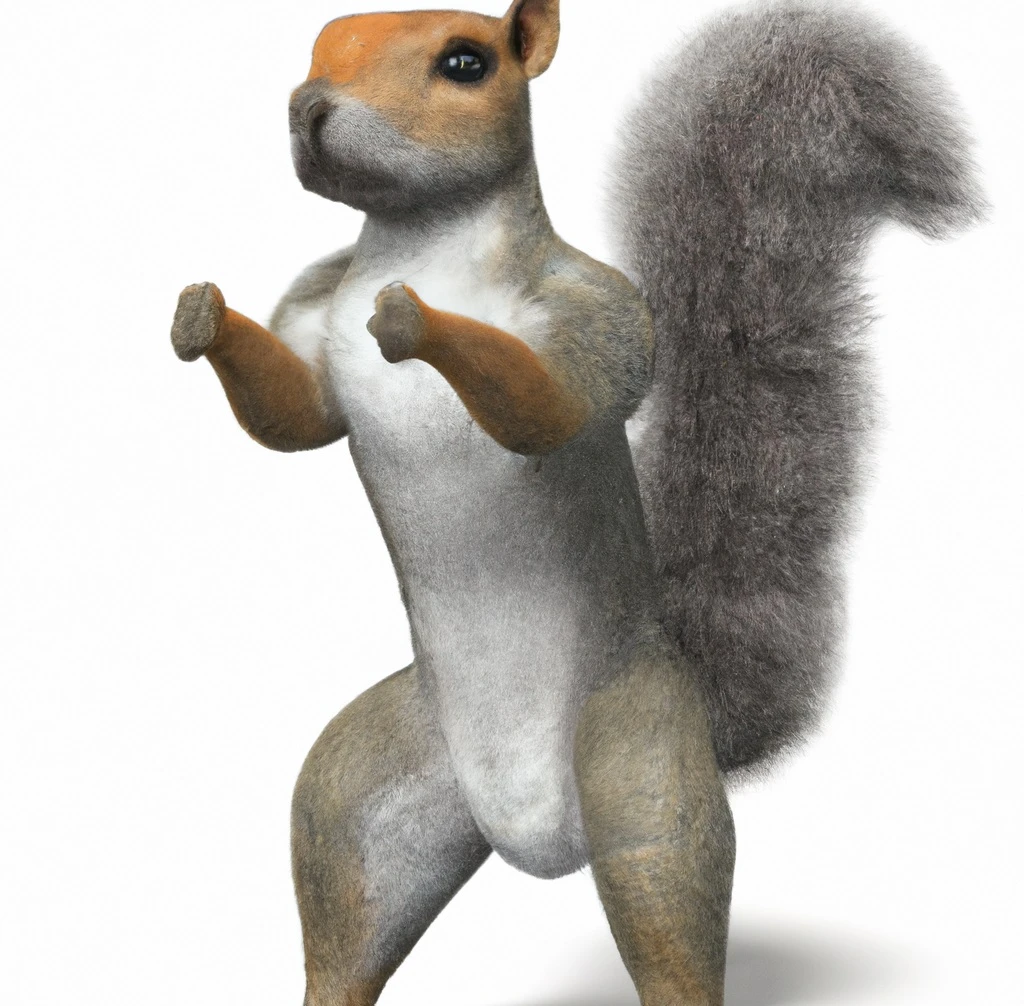
List several reasons how the human idea of the “cost of living” means nothing to the mighty and resourceful common grey squirrel.
- Food availability: The grey squirrel has a diverse diet and can adapt to eating a wide range of foods, including nuts, seeds, fruits, insects, and even bird eggs. They are skilled at foraging and can find food in a variety of environments, so the cost of living in terms of food scarcity is not a concern for them.
- Shelter: Grey squirrels are adaptable to living in various types of trees and can build nests called dreys. They can also use pre-existing structures, such as birdhouses, to provide shelter. Thus, the cost of living in terms of finding suitable housing is not a concern for them.
- Lack of monetary currency: The concept of cost of living is tied to monetary currency, which is not applicable to grey squirrels. They do not use money to purchase goods or services, so the idea of the cost of living is meaningless to them.
- No reliance on human infrastructure: Grey squirrels do not rely on human infrastructure such as roads, buildings, or transportation systems. They can easily move around and adapt to their environment without needing to pay for or use these services.
- No social structures: Grey squirrels do not have a societal structure that requires them to maintain a certain standard of living. They are not concerned with status or social expectations, so the idea of the cost of living does not apply to them.
Elaborate on food availability. Do grey squirrels have to pay other squirrels ‘X’ amount of acorns to obtain food? And do they need permits in order to forage for food like many humans have to?
Grey squirrels do not have to pay other squirrels or obtain permits to forage for food. They are able to find and gather food on their own through their natural instincts and abilities.
Grey squirrels are opportunistic feeders, meaning they can eat a variety of foods depending on what is available in their environment.
They have a keen sense of smell and excellent eyesight, which allows them to locate and identify food sources, such as nuts, seeds, fruits, and insects. They are also able to store food for later use, often burying nuts and other items in the ground to retrieve when food sources become scarce.
Unlike humans, grey squirrels do not have a currency system or a need to exchange goods or services. They do not have to pay other squirrels for food or any other resources. While squirrels may sometimes fight over food, these conflicts are usually territorial and related to access to resources, rather than monetary exchange.
In terms of permits, grey squirrels do not need any sort of legal permission to forage for food. They are not subject to human laws or regulations, and are free to move around and gather food as they please. The concept of permits and regulations only applies to human activities, and is not applicable to animals in the wild.
Elaborate on shelter. Do grey squirrels have to pay “rent” for their dreys in the form of ‘X’ amount of acorns to another squirrel for that privilege?
Grey squirrels do not have to pay “rent” or any form of compensation to other squirrels in order to occupy a drey. Dreys are essentially nests made out of twigs, leaves, and other natural materials, and are typically built in the forks of trees or other secure locations.
Grey squirrels are able to build their own dreys or occupy pre-existing ones without needing permission or payment from other squirrels. They often build multiple dreys within their home range, and may switch between them depending on factors such as weather and safety concerns.
While grey squirrels may sometimes engage in territorial disputes with other squirrels over access to resources such as food and shelter, these conflicts are generally resolved through physical displays and vocalizations rather than any sort of monetary exchange.
In summary, grey squirrels do not have to pay “rent” or any other form of compensation to other squirrels in order to occupy a drey. They are able to build or occupy dreys freely, without any sort of human-like contractual agreement or exchange of goods.
Elaborate on the lack of monetary currency. Grey squirrels don’t use acorns as a form of payment system? Like they can’t trade ‘X’ amount of acorns to another squirrel for ‘X’ amount of twigs at a sort of squirrel-centric ‘Home Depot’ store?
Grey squirrels do not use any form of monetary currency or exchange system. While squirrels do use food as a means of exchange in some laboratory studies, this behavior is not observed in the wild.
Squirrels gather and store food for their own survival and do not use it as a means of exchange or trade. They do not have a concept of value or currency, and do not engage in economic activities that involve buying or selling goods or services.
In addition, squirrels do not have a system of ownership or property rights as humans do. They do not own the trees or dreys in which they live, nor do they have exclusive rights to any particular food source. Instead, they rely on their natural instincts and abilities to survive and thrive in their environment.
Therefore, the idea of a squirrel-centric “Home Depot” store or any other form of economic exchange system is not applicable to grey squirrels or any other animals in the wild. They live according to natural laws and do not engage in the types of economic behaviors that are characteristic of human societies.
Elaborate on no reliance on human infrastructure. Grey squirrels do not have to pay tolls to move between tree to tree? Do they require a squirrel passport if they cross the border between a section of United States and Canadian forest?
Grey squirrels do not rely on human infrastructure, such as roads, buildings, or transportation systems. They are able to move around and adapt to their environment without needing to pay for or use these services.
Squirrels move between trees by jumping from one branch to another, using their powerful hind legs and bushy tails for balance. They do not have to pay tolls or any other sort of fee to move between trees or other natural features in their environment.
Similarly, squirrels do not require a “squirrel passport” or any sort of legal documentation to cross borders between sections of forest, whether they are in the United States or Canada or any other country.
Squirrels are wild animals and do not recognize human borders or political boundaries. They are free to move around and occupy any suitable habitat within their range, without any sort of human intervention or regulation.
In summary, grey squirrels do not rely on human infrastructure or require any sort of payment or legal documentation to move around or occupy different areas within their range. They are able to move and adapt to their environment according to their natural instincts and abilities, without needing to rely on human systems or technologies.
Elaborate on no social structures. Is the common grey squirrel able to freely move from one forest to another if the tyrannical squirrel government of the first forest was impeding on his alternative squirrel lifestyle? A sort of free association mentality among squirrels?
Grey squirrels do not have any social structures or political systems in the sense that humans do. They do not have a centralized government or any sort of hierarchical system of authority. Instead, grey squirrels typically live in loose associations within a particular geographic range or home territory.
Squirrels are free to move from one forest to another without any sort of interference from other squirrels or squirrel “governments.” They are not bound to any particular social or political structure and are able to move and adapt according to their natural instincts and abilities.
While grey squirrels may exhibit some degree of territorial behavior, this behavior is not based on any sort of political or social structure. Instead, it is a natural behavior that helps them to secure access to food, shelter, and other resources within their home range.
Squirrels may defend their territory from other squirrels or predators, but they do not have any sort of formal government or system of authority that regulates their behavior.
In summary, grey squirrels do not have any social structures or political systems that regulate their behavior or movements. They are free to move and adapt to their environment according to their natural instincts and abilities, without needing to adhere to any sort of formal social or political structure.
Taking all the preceding information into consideration, does the life of a common grey squirrel possess many libertarian characteristics?
Some of the characteristics of a common grey squirrel’s life, such as their lack of reliance on human infrastructure, absence of social structures and political systems, and free movement and adaptation to their environment, could be seen as having libertarian characteristics.
Libertarianism emphasizes individual liberty and limited government intervention, and the life of a grey squirrel is largely characterized by individualistic behaviors and self-reliance. Squirrels are not bound to any particular social or political structure, and they are able to move and adapt to their environment according to their own instincts and abilities, without needing to rely on external authorities or systems.
However, it is important to note that applying human political ideologies such as libertarianism to the behavior of wild animals may not always be accurate or meaningful.
While certain aspects of a grey squirrel’s life may align with libertarian principles, it is not appropriate to view their behavior through a strictly human lens. Grey squirrels have evolved over millions of years to survive and thrive in their natural environment, and their behavior is shaped by a complex array of biological and ecological factors, rather than political ideologies.
In short, is the common grey squirrel able to live out its life to the best of the ability that natural law and biology has conferred upon it? Or is it limited to the rules and regulations that ‘big squirrel government’ has placed upon it without the individual squirrel’s consent?
The common grey squirrel is able to live out its life to the best of its ability within the natural laws and biological constraints that shape its behavior and adaptation to the environment. While squirrels may exhibit some degree of territorial behavior, this behavior is not based on any sort of formal government or system of authority.
Squirrels are not bound to any particular social or political structure, and they are able to move and adapt to their environment according to their own instincts and abilities.
They are not subject to any sort of “big squirrel government” that places rules and regulations upon them without their consent. Instead, squirrels live and interact with their environment in accordance with their natural instincts and biological drives.
In summary, the common grey squirrel is not subject to any sort of external political or social control, but is able to live and adapt to its environment according to its own biological nature and instincts.


Leave a Reply