 by Webmaster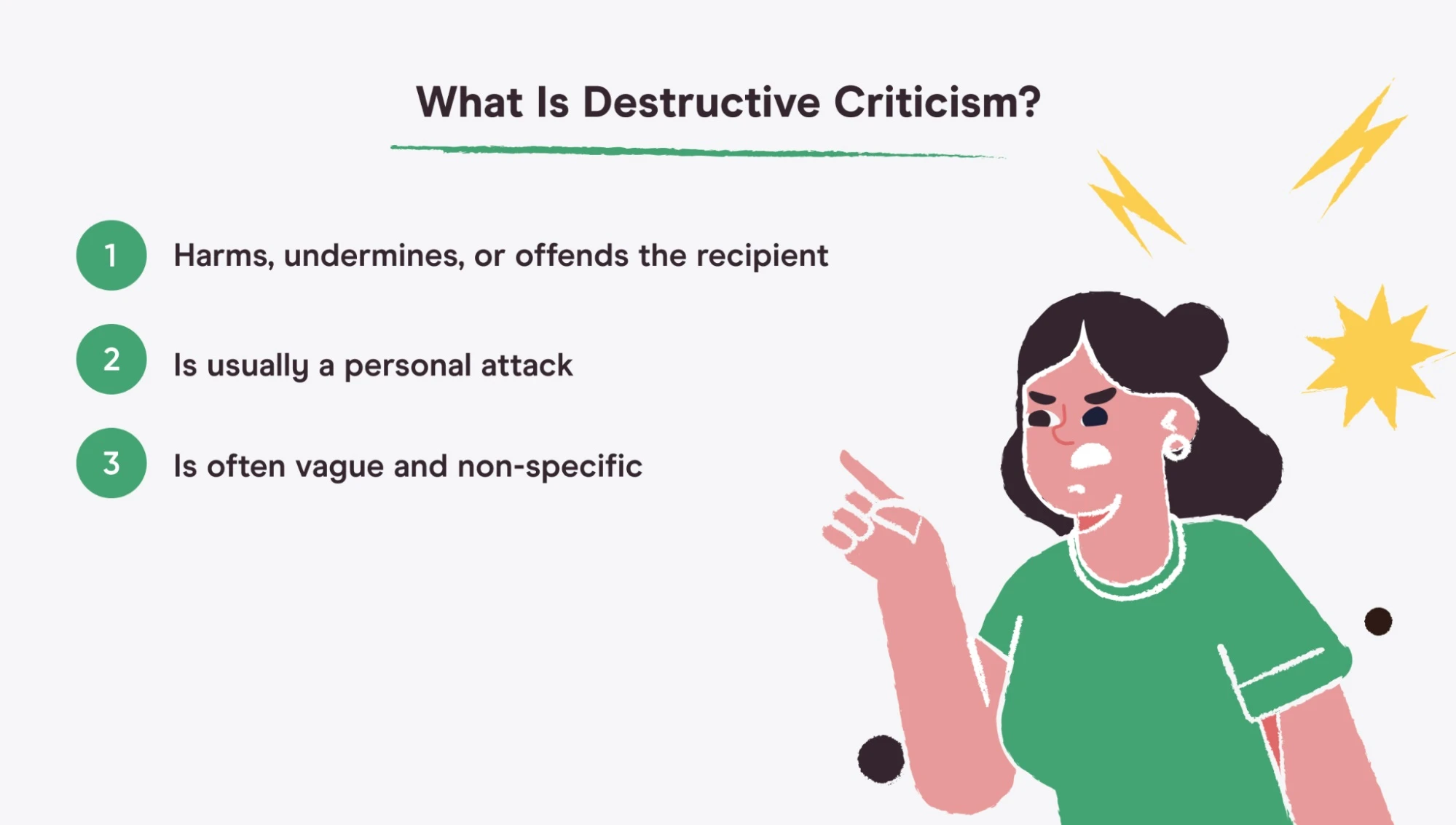
Is “constructive criticism” often used as an excuse to criticize somebody without any backlash or retort?
It is possible that some people may use the term “constructive criticism” as an excuse to criticize someone without fear of backlash or retort. However, constructive criticism is intended to be feedback that is given in a way that is helpful and intended to improve the recipient’s performance, skills, or behavior.
The key difference between constructive criticism and non-constructive criticism is the intention behind the feedback. Constructive criticism is intended to be helpful, while non-constructive criticism is often intended to be hurtful or negative. Constructive criticism focuses on the behavior or action that needs improvement, while non-constructive criticism may attack the person’s character or personality.
It is important to note that receiving constructive criticism can still be difficult, and it is natural for people to feel defensive or hurt when receiving feedback, even if it is intended to be helpful. However, if the feedback is truly constructive, it should be delivered in a respectful and helpful manner, and the recipient should be given the opportunity to respond and ask questions.
In short, constructive criticism should be used as a tool to help someone improve, not as an excuse to criticize them without any backlash or retort.
But do people often use the excuse of “constructive criticism” to gaslight people?
Yes, it is possible for people to use the term “constructive criticism” as a form of gaslighting. Gaslighting is a form of emotional abuse where the abuser manipulates the victim into doubting their own thoughts, feelings, and perceptions. In the context of constructive criticism, the abuser may use the guise of offering feedback to control and manipulate the victim.
For example, the abuser may use the term “constructive criticism” to justify their negative comments, even if the comments are not actually constructive or helpful. The abuser may also use the term to make the victim feel guilty or ashamed for not accepting the feedback, even if the feedback is unfair or unwarranted.
It is important to remember that constructive criticism should be offered in a respectful and helpful manner, and it should focus on the behavior or action that needs improvement.
If someone is using the term “constructive criticism” as a way to control or manipulate you, it may not actually be constructive, and it may be a form of gaslighting. It is important to trust your instincts and seek support if you feel like you are being manipulated or abused.
List five examples of gaslighting disguised as “constructive criticism”.
Here are five examples of gaslighting disguised as “constructive criticism”:
- Criticizing someone’s emotions: “I understand that you’re upset, but you’re being too sensitive. You need to learn to control your emotions better if you want to be successful.”
- Dismissing someone’s perspective: “I appreciate your opinion, but you’re not seeing the big picture. You need to look at things more objectively.”
- Insinuating incompetence: “I’m just trying to help you improve, but you’re not living up to your potential. You need to work harder if you want to be successful.”
- Using negative comparisons: “You’re not as good as [insert name here] at this. You need to step up your game if you want to succeed.”
- Shifting blame: “I’m trying to help you, but you’re not willing to listen. You’re being difficult and making things harder for everyone else.”
List five ways a gaslighter may use the term “constructive criticism” as a shield.
Here are five ways a gaslighter may use the term “constructive criticism” as a shield:
- Minimizing the impact of their words: “I’m not being critical, I’m just offering constructive criticism to help you improve.”
- Dismissing the other person’s feelings: “I’m just giving you feedback. If you can’t handle it, that’s not my problem.”
- Insisting that their intentions are pure: “I’m not trying to hurt you, I’m just trying to help you grow and improve.”
- Using vague or general language to avoid accountability: “I’m just giving you constructive criticism. You need to work on a lot of things if you want to be successful.”
- Accusing the other person of being too sensitive: “I’m just being honest. If you can’t handle criticism, maybe you’re not cut out for this.”
Elaborate on minimizing the impact of their words.
Minimizing the impact of their words is a common tactic used by gaslighters to shield themselves from criticism. When a gaslighter offers “constructive criticism” but downplays the impact of their words, they are trying to deflect responsibility for the emotional harm they may be causing.
For example, a gaslighter might say something like, “I’m not being critical, I’m just offering constructive criticism to help you improve.” This statement may sound innocuous at first, but it can be used to minimize the impact of the gaslighter’s words.
By framing their comments as “constructive criticism,” the gaslighter is suggesting that their words are not intended to harm the other person, but rather to help them improve.
However, this statement is problematic because it ignores the fact that criticism can be harmful, even when it is offered with good intentions.
If the other person feels attacked or hurt by the gaslighter’s comments, it is not enough for the gaslighter to simply say that their words were intended to be helpful. The gaslighter needs to take responsibility for the emotional impact of their words and offer a genuine apology if they have caused harm.
In short, minimizing the impact of their words is a tactic used by gaslighters to avoid taking responsibility for the harm they may be causing. It is important to recognize this tactic and hold gaslighters accountable for the emotional impact of their words, even if they claim to be offering “constructive criticism.”
Elaborate on insisting that their intentions are pure.
Insisting that their intentions are pure is another common tactic used by gaslighters to shield themselves from criticism. When a gaslighter offers “constructive criticism” but claims that their intentions are pure, they are attempting to deflect any negative feedback or criticism by framing themselves as a well-intentioned helper.
For example, a gaslighter might say something like, “I’m not trying to hurt you, I’m just trying to help you grow and improve.” This statement sounds positive, but it can be used to dismiss any negative reactions to their words. By insisting that their intentions are pure, the gaslighter is suggesting that any negative reactions or emotions from the other person are unwarranted and unreasonable.
However, this statement is problematic because it ignores the impact of the gaslighter’s words and actions on the other person. It is possible for someone to have good intentions but still cause harm with their words or actions.
Insisting that their intentions are pure can be a way for gaslighters to avoid taking responsibility for the harm they may be causing and shift the blame onto the other person for not being receptive to their “help.”
In short, insisting that their intentions are pure is a tactic used by gaslighters to deflect any negative feedback or criticism by framing themselves as a well-intentioned helper. It is important to recognize this tactic and hold gaslighters accountable for the impact of their words and actions, regardless of their intentions.
Elaborate on using vague or general language to avoid accountability.
Using vague or general language is a tactic that gaslighters use to avoid taking responsibility for their words and actions. When a gaslighter offers “constructive criticism” using vague or general language, they are trying to deflect any specific criticism or accountability by making broad and nonspecific statements.
For example, a gaslighter might say something like, “You need to work on a lot of things if you want to be successful.” This statement sounds like it is offering constructive criticism, but it is actually very vague and unhelpful. The gaslighter is not providing any specific feedback or suggestions for improvement, making it difficult for the other person to address any specific issues.
By using vague or general language, the gaslighter is also avoiding any specific criticism or accountability. If the other person tries to ask for specific feedback or clarification, the gaslighter can deflect the conversation by saying that they are just offering general advice or that the other person is being too defensive.
However, this tactic is problematic because it doesn’t actually help the other person improve and can be used to avoid taking responsibility for the impact of their words and actions. It is important to recognize this tactic and challenge gaslighters to provide specific feedback and take accountability for the impact of their words and actions.
In short, using vague or general language is a tactic used by gaslighters to avoid taking responsibility for their words and actions by making broad and nonspecific statements. It is important to hold gaslighters accountable for the impact of their words and actions and to ask for specific feedback and suggestions for improvement.



Leave a Reply