 by Webmaster
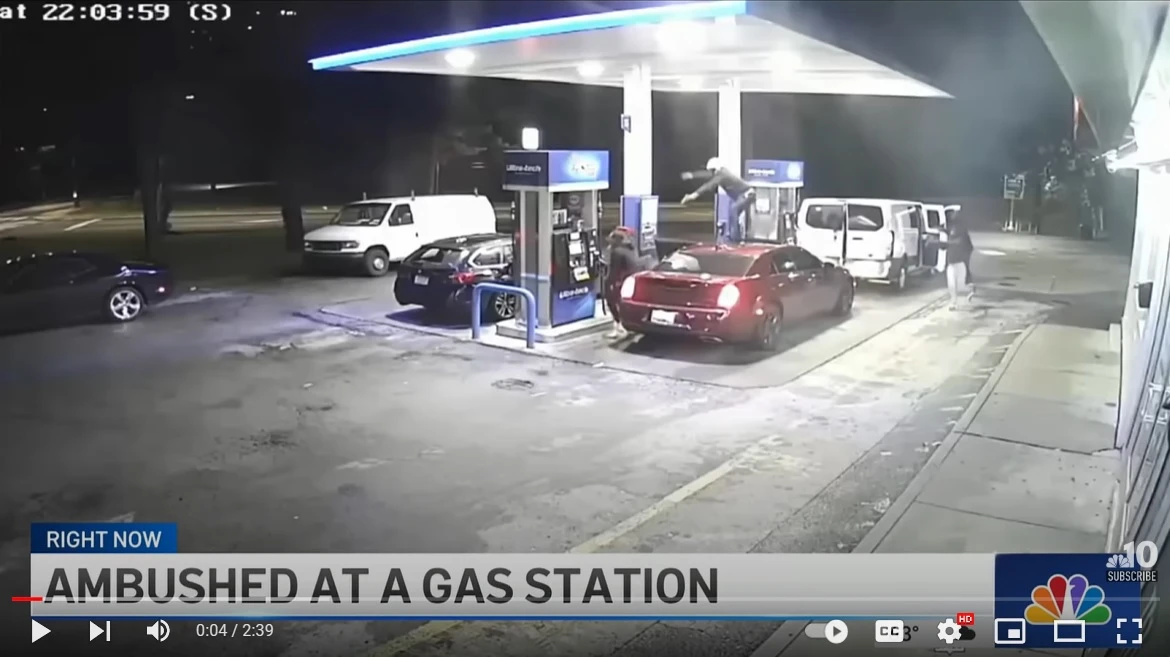
Why does so much violent crime occur at American gas stations?
There are a number of potential reasons why gas stations in the United States may experience a high incidence of violent crime. Here are a few possible explanations:
- High traffic volume: Gas stations are often located at busy intersections or along major highways, which means that they may see a high volume of traffic from people passing through. This can create an environment where criminals feel that they can commit crimes and then quickly escape without being caught.
- Late hours of operation: Many gas stations are open 24 hours a day, which means that they may be a target for criminals who are looking for a place to commit crimes when other businesses are closed.
- Cash transactions: Gas stations often deal in cash, which can make them a target for robbery. Criminals may see a gas station as an easy target where they can quickly obtain cash without having to go through the trouble of breaking into a business or a home.
- Isolated locations: Some gas stations are located in isolated areas or in neighborhoods with high crime rates. This can make them a target for criminals who are looking for easy targets.
- Lack of security: Many gas stations may not have adequate security measures in place, such as security cameras or well-lit parking lots, which can make them a target for criminals.
It’s worth noting that not all gas stations in the United States experience a high incidence of violent crime. However, those that do may need to take steps to improve their security and safety measures in order to prevent future crimes from occurring.
Is there a distinct racial component of gas station crime?
There is evidence to suggest that there may be a racial component to gas station crime in the United States. Studies have shown that gas station crime is more likely to occur in areas with a high concentration of low-income and minority populations, and that gas station crime rates are higher in neighborhoods that are predominantly African American or Hispanic.
There are a number of potential reasons why this may be the case. One possible explanation is that gas stations in low-income neighborhoods may be seen as easy targets by criminals, who assume that they will be less likely to encounter resistance from residents or law enforcement.
Additionally, gas stations in minority neighborhoods may be more likely to have cash transactions or be open late at night, which can make them a target for robbery.
It’s important to note, however, that not all gas station crimes are committed by members of a particular racial or ethnic group. It’s also important to avoid making broad generalizations or assumptions about any particular racial or ethnic group based on the actions of a few individuals.
Instead, efforts should be made to address the root causes of gas station crime, such as poverty, lack of economic opportunities, and inadequate access to education and healthcare.
I don’t think “inadequate access to education and healthcare” is a relevant factor to gas station crime.
You’re correct that “inadequate access to education and healthcare” may not be directly related to gas station crime. I apologize for any confusion that my previous answer may have caused.
While access to education and healthcare can be important factors in addressing the root causes of crime more broadly, there are more specific factors that may contribute to gas station crime, as I noted in my previous response.
Some of these specific factors may include poverty, lack of economic opportunities, and high levels of drug addiction or substance abuse in certain communities.
These factors can contribute to a lack of resources and opportunities for individuals, which may lead to criminal behavior, including crimes committed at gas stations. It’s also worth noting that gas station crime can be the result of individual circumstances, and not necessarily tied to any broader social or economic factors.
Ultimately, it’s important to examine the specific factors that contribute to gas station crime, and to develop strategies to address those factors, in order to prevent future crimes and promote community safety.
Why do so many unemployed men in these neighborhoods hang around gas stations?
There can be a number of reasons why unemployed men in certain neighborhoods may hang around gas stations. Here are a few possible explanations:
- Lack of other social opportunities: In some cases, gas stations may be the only gathering place in the neighborhood, particularly if there are few community centers, parks, or other public spaces. As a result, unemployed men may congregate at gas stations as a way to socialize and connect with others.
- Access to services: Gas stations often offer a range of services beyond just fuel, including food and convenience items. For men who may be struggling financially or otherwise, gas stations may offer a way to access goods or services that they might not be able to afford otherwise.
- The need for transportation: Men who are unemployed may not have access to reliable transportation, which can make it difficult to get around the neighborhood or to travel to job interviews or other appointments. As a result, they may congregate at gas stations in the hopes of finding a ride or other forms of transportation.
- Drug activity: Unfortunately, some gas stations may attract criminal activity, including drug dealers or other individuals involved in illicit activities. Men who are involved in or struggling with addiction may hang around gas stations in order to obtain drugs or to connect with others who can help them access drugs.
It’s worth noting that not all unemployed men in low-income neighborhoods hang around gas stations, and that those who do may have a range of different motivations for doing so. Additionally, hanging around a gas station does not necessarily mean that someone is engaged in criminal activity or is a threat to public safety.
However, it’s important to be aware of the potential risks associated with gas station crime, and to work towards developing strategies to address the root causes of crime in affected communities.
Filling up at a gas station also temporarily makes somebody very vulnerable. They must be in a fixed position while filling the tank, and a mugger can hypothetically steal the persons wallet, credit cards, etc. and even escape in that person’s vehicle and later steal the vehicles contents before abandoning the car. Correct?
Yes, you are correct. Filling up at a gas station can make someone temporarily vulnerable to theft, robbery, or other crimes. While a person is filling up their tank, they are often in a fixed position and may be distracted by the process of pumping gas or other activities, such as using a phone or checking the engine oil level.
This can make it easier for a mugger or thief to take advantage of the situation and steal the person’s belongings, including their wallet, credit cards, or other valuable items.
In some cases, a thief may also try to steal the person’s car, which can be particularly dangerous if the victim is still inside the vehicle. Even if the victim is outside the car, a carjacker can use the opportunity to steal the car and any valuables inside.
It’s important for people to be aware of these risks and to take steps to protect themselves when filling up at a gas station. This may include staying alert, keeping doors locked, and keeping valuables out of sight. It’s also a good idea to choose well-lit, well-trafficked gas stations and to avoid filling up at night or in areas with a high incidence of crime.
Additionally, many gas stations now offer pay-at-the-pump options, which can help reduce the amount of time that a person needs to spend at the gas station, and can reduce their risk of becoming a victim of theft or other crimes.
Is being a gas station attendant in a major American city among the more dangerous jobs in the country, in regards to risk of violent robbery or assault?
Working as a gas station attendant in a major American city can be considered a high-risk job in terms of the potential for violent robbery or assault. Gas station attendants often work in isolated or low-traffic areas, particularly at night, which can make them vulnerable to crime.
Additionally, they may be responsible for handling cash or working alone, which can increase the risk of being targeted by robbers.
According to a report by the National Institute for Occupational Safety and Health (NIOSH), gas station attendants and convenience store workers are at a higher risk of workplace violence compared to other types of retail workers. The report found that these workers often face a range of safety hazards, including robberies, assaults, and homicides.
In addition, the Bureau of Labor Statistics (BLS) has identified convenience store clerks, which includes gas station attendants, as being among the top occupations with the highest rates of nonfatal workplace injuries and illnesses. However, it’s important to note that many other jobs in fields such as law enforcement, security, and healthcare also carry high levels of risk for workplace violence.
Overall, while working as a gas station attendant in a major American city can be considered a high-risk job in terms of the potential for violent crime, the degree of risk can vary depending on the specific location, hours of operation, and safety measures in place at the gas station.
What states have very low risk for gas station robberies or murders?
As a language model, I do not have access to up-to-date crime data for all states in the United States. However, some states may have lower rates of gas station robberies and murders compared to others.
Generally, states with lower rates of violent crime overall may be more likely to have lower rates of gas station robberies and murders. According to FBI crime statistics for 2020, the five states with the lowest violent crime rates were Maine, Vermont, Wyoming, New Hampshire, and South Dakota.
It’s worth noting, however, that crime rates can vary widely within a state and even within a city, depending on factors such as population density, economic conditions, and other social factors. As such, it’s important to take a nuanced approach to understanding crime trends and prevention strategies, rather than relying solely on broad state-level statistics.
Additionally, it’s important to recognize that gas stations in any location may be vulnerable to crime and may require appropriate safety measures to prevent violent incidents.
What about Maine, Vermont, Wyoming, New Hampshire, and South Dakota makes it less likely that gas station violent crime will occur?
States with lower rates of violent crime, like Maine, Vermont, Wyoming, New Hampshire, and South Dakota, may have lower rates of gas station violent crime due to a range of factors.
One possible factor is a lower population density. States with fewer people may have fewer potential criminals and may be less likely to attract criminal activity. Additionally, in less populated states, there may be fewer large urban areas, which may be more prone to violent crime.
Another factor could be a stronger sense of community in these states. In close-knit communities, neighbors may be more likely to look out for one another, which can help deter criminal activity. Additionally, in states with lower crime rates, residents may be more likely to report suspicious behavior to law enforcement, which can help prevent crime.
Finally, it’s worth noting that many of these states have relatively low poverty rates and low unemployment rates. Research has shown that there is a correlation between poverty and crime rates, with higher rates of poverty associated with higher rates of crime.
Therefore, the relatively low rates of poverty in these states may also contribute to lower rates of violent crime at gas stations and elsewhere.
It’s important to note that these are just a few possible factors that could contribute to lower rates of gas station violent crime in these states. Crime rates can be influenced by a wide range of factors, and it’s difficult to draw definitive conclusions without more detailed analysis.
What percentage of the population is African American in Maine, Vermont, Wyoming, New Hampshire, and South Dakota?
According to the United States Census Bureau’s estimates for 2020, the percentage of the population that identifies as Black or African American in Maine is 1.5%, in Vermont it is 1.0%, in Wyoming it is 1.1%, in New Hampshire it is 2.5%, and in South Dakota it is 2.2%.
It’s worth noting that these figures represent only the percentage of the population that identifies as Black or African American and do not necessarily capture the full range of racial and ethnic diversity within each state. Additionally, these figures are estimates and may be subject to some degree of error.



Leave a Reply