 by Webmaster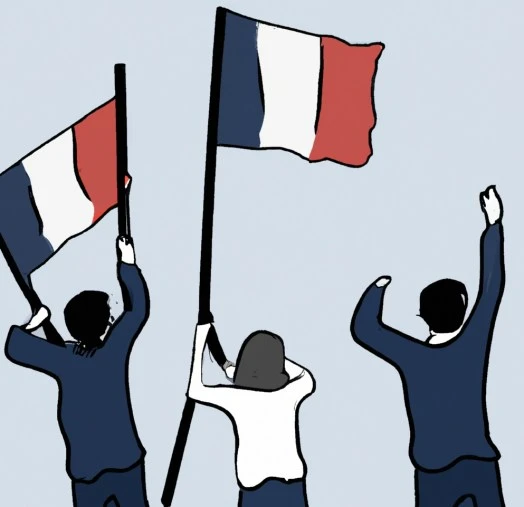
Why do the French people strike so often over things that Americans or even other Europeans would never even consider?
The frequency of strikes in France is a complex issue that has historical, cultural, and political roots. Here are some possible reasons:
- Strong Labor Tradition: France has a strong labor tradition that goes back to the French Revolution. Workers have organized and mobilized for better working conditions, wages, and social protections since the 19th century. Unions are powerful and represent a significant portion of the workforce.
- Social Safety Net: The French social safety net is comprehensive and generous, but it also comes with high taxes and social charges. Many workers feel that they are entitled to these benefits and are willing to fight to maintain them. When the government proposes reforms that could threaten the social safety net, workers often mobilize to protect their rights.
- Political Culture: French political culture is more confrontational than in other countries. It is common for citizens to take to the streets to express their dissatisfaction with government policies. French citizens are more likely to see themselves as part of a collective and to fight for the common good.
- Centralized Decision-Making: France has a highly centralized government, which means that decisions are often made at the national level. This can lead to a sense of alienation and frustration among local communities who feel that their needs are not being addressed. Strikes are a way for these communities to make their voices heard.
- Cultural Identity: French people take pride in their cultural identity and their way of life. They see their labor rights and social protections as a part of their cultural heritage. When these are threatened, they feel that their way of life is under attack and are more likely to take to the streets to defend it.
It is important to note that not all French people support strikes, and not all strikes are successful. The frequency of strikes in France may seem high compared to other countries, but it is a reflection of the French political and social context.
Elaborate on the strong labor tradition. Why are the unions so powerful?
The strong labor tradition in France has its roots in the 19th century, when workers organized themselves to demand better working conditions, wages, and social protections. This tradition has continued to the present day, and unions are powerful and represent a significant portion of the workforce.
There are several reasons why the unions are so powerful in France:
- Legal Framework: France has a strong legal framework that protects workers’ rights to unionize and bargain collectively. The labor code guarantees workers the right to strike, and unions have legal standing in collective bargaining negotiations.
- Collective Bargaining: Collective bargaining is a central feature of the French labor system. Unions negotiate with employers and the government on behalf of workers to set industry-wide standards for wages, benefits, and working conditions.
- Union Density: Union density in France is relatively high compared to other countries. According to the International Trade Union Confederation, about 8.1 million workers in France are union members, representing about 26% of the workforce. This high level of union density gives the unions more bargaining power in negotiations.
- Union Structure: The union structure in France is different from that of many other countries. Rather than having a few large unions that represent workers across industries, there are many smaller unions that represent workers in specific sectors. This allows for more tailored negotiations and greater representation of workers’ interests.
- Political Influence: Unions in France are politically active and have significant influence on government policy. Union leaders sit on various government bodies, and unions are consulted on labor law reforms and other policy decisions that affect workers.
Overall, the strong labor tradition in France and the power of the unions reflect a cultural and political context that values worker rights and protections. While strikes can be disruptive, they are seen as an important tool for workers to demand better conditions and protect their interests.
Elaborate on the political culture in France. Are French citizens generally not as individualistic as Americans in this regard?
French political culture is characterized by a strong sense of collective identity and a tradition of political activism. French citizens are more likely to see themselves as part of a larger community and to fight for the common good than to prioritize individual interests.
Compared to Americans, French citizens are generally less individualistic and more collectivistic in their political views. This is reflected in several ways:
- Attitudes Toward the State: French citizens have a strong expectation that the state should provide a range of social protections and public services. These include free healthcare, education, and public transportation, as well as a comprehensive social safety net. While Americans generally have a more limited view of the role of government, French citizens see the state as responsible for ensuring the welfare of all citizens.
- Political Activism: Political activism is more common in France than in the United States. French citizens are more likely to participate in protests, strikes, and other forms of collective action to demand change. This is partly due to the strong labor tradition in France, but it also reflects a broader culture of political engagement and civic participation.
- Attitudes Toward Inequality: French citizens are generally more skeptical of social and economic inequality than Americans. They are more likely to support policies that redistribute wealth and provide greater access to public services. This reflects a belief that social and economic inequality are a threat to the common good, rather than simply an individual problem.
Overall, French political culture reflects a strong sense of collective identity and a commitment to the common good. While this can sometimes lead to confrontational politics, it also reflects a deep-seated belief in the importance of solidarity and social cohesion.
Elaborate on centralized decision-making. Do Paris-based politicians hold a highly disproportionate amount of power over the fates of rural communities even in the far south of the country?
Centralized decision-making is a characteristic of the French political system, where power is concentrated in Paris and decisions are often made at the national level. This can sometimes result in a sense of alienation and frustration among local communities, particularly in rural areas, who feel that their needs are not being adequately addressed.
While it is true that Paris-based politicians hold a significant amount of power in the French political system, it is also worth noting that France has a relatively decentralized system of government compared to some other countries. Regions and local governments have some autonomy in decision-making, and there are mechanisms in place to ensure that local voices are heard.
However, there are still concerns about the disproportionate amount of power that Paris-based politicians hold over rural communities. This is particularly true in the far south of the country, where there is a sense that the needs and concerns of these communities are not always taken into account in national decision-making.
One example of this is the issue of rural depopulation, where many small towns and villages are struggling to maintain their populations and economic viability. While the French government has introduced policies to support rural areas, there is a sense that these policies are not always effective in addressing the specific challenges faced by these communities.
Overall, the issue of centralized decision-making in France is complex and multifaceted. While Paris-based politicians do hold a significant amount of power, there are also mechanisms in place to ensure that local voices are heard. However, there are concerns about the extent to which rural communities are able to influence national decision-making, and this is an ongoing issue in French politics.
Elaborate on cultural identity. In a slightly humorous sense, is a stereotype of striking on a regular basis “just what the French do”?
Cultural identity is a complex and multi-dimensional concept that refers to the shared beliefs, values, traditions, and practices of a particular group of people. While it is true that striking is a relatively common phenomenon in France, it is important to recognize that this is just one aspect of the country’s cultural identity.
The stereotype of the French as frequent strikers has some basis in reality. France has a long history of labor activism, and strikes are seen as a legitimate means of expressing dissatisfaction with working conditions, wages, and social policies. However, it is also important to note that not all French people are frequent strikers, and that the country’s cultural identity is shaped by many other factors as well.
French cultural identity is shaped by a wide range of factors, including history, language, religion, and cuisine. The French are known for their love of good food and wine, their appreciation of art and culture, and their deep sense of national pride. They also place a high value on intellectual and philosophical pursuits, and are known for their contributions to literature, philosophy, and science.
In a slightly humorous sense, the stereotype of the French as frequent strikers might be seen as a way of poking fun at the country’s political and social culture. However, it is important to recognize that this stereotype is just one aspect of a much broader and more complex cultural identity. French people are individuals with diverse perspectives and experiences, and should not be reduced to a single stereotype.



Leave a Reply