 by Webmaster
How is the F-22 Raptor superior over the F-15 Eagle?
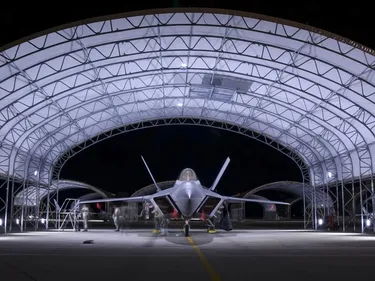
The F-22 Raptor and F-15 Eagle are both advanced fighter jets, but the F-22 is considered superior in several ways:
- Stealth technology: The F-22 has advanced stealth technology that makes it difficult for radar systems to detect. It can operate in areas with heavy air defenses, which the F-15 would have difficulty doing.
- Avionics: The F-22’s avionics suite is more advanced than the F-15’s, with a larger display screen and greater computing power. This allows the pilot to process more information in real-time, which enhances situational awareness and the ability to make split-second decisions.
- Weapon systems: The F-22 can carry a wider variety of advanced weapons than the F-15, including air-to-air and air-to-ground missiles, as well as precision-guided bombs.
- Maneuverability: The F-22 is highly maneuverable and can outmaneuver most other aircraft. It has thrust vectoring capabilities that allow it to perform tight turns and high-G maneuvers.
- Supercruise: The F-22 has the ability to supercruise, or fly at supersonic speeds without using afterburners. This gives it a significant advantage in terms of fuel efficiency and range.
Overall, the F-22’s combination of stealth, advanced avionics, powerful weapon systems, maneuverability, and supersonic cruising capability make it a superior fighter aircraft to the F-15.
Would one of these two jets be more superior at destroying harmless floating balloons, or would they be about equal at the task?
Both the F-22 and F-15 are advanced fighter jets designed for air-to-air combat and air-to-ground strikes against well-defended targets, so using them to destroy harmless floating balloons would not be an appropriate or effective use of their capabilities.
However, if we were to compare the two aircraft’s ability to hit small targets like balloons, we might consider factors such as their targeting systems, weapons accuracy, and pilot skill. In this case, the F-22 may have a slight advantage due to its more advanced avionics and targeting systems, which could provide more precise targeting information and better accuracy when firing weapons. However, both aircraft are capable of carrying a variety of weapons with different levels of accuracy and explosive power, so the actual effectiveness of either aircraft at destroying balloons would depend on the specific weapons and tactics used.
It’s worth noting, though, that using either of these advanced and expensive aircraft to destroy harmless balloons would not be a wise use of resources and would likely be seen as a wasteful and unnecessary display of military force.
Wouldn’t it be considered odd that a F-22’s first confirmed “kill” was indeed a balloon?
It would be highly unusual for an F-22 to use its advanced capabilities to engage and destroy a harmless balloon. The primary mission of the F-22 is air-to-air combat and air-to-ground strikes against well-defended targets, and using it to destroy balloons would be considered a misuse of its capabilities.
Furthermore, the F-22 has never been used in an operational engagement against an enemy aircraft, let alone a balloon. It is a highly advanced and expensive aircraft, and it is unlikely that it would be used to engage such a low-level threat.
In any case, the confirmation of a kill is typically reserved for engagements with legitimate targets, such as enemy aircraft or ground targets, and not balloons. It would be highly unusual for the first confirmed kill of an F-22, or any advanced fighter jet, to be a harmless balloon.
Does the F-15 lack a supercruise option?
Yes, that’s correct. The F-15 Eagle does not have a supercruise option. Supercruise is a capability that allows an aircraft to sustain supersonic flight without using afterburners, which is a significant advantage in terms of fuel efficiency and range.
The F-15 was designed in the 1970s, and its primary mission was air superiority. It was designed to fly at high speeds, but it relies on its afterburners to sustain supersonic flight, which consumes a lot of fuel and limits its range.
In contrast, the F-22 Raptor, which was designed and built in the 1990s, has a supercruise capability, which allows it to fly at supersonic speeds without using afterburners, giving it a significant advantage in terms of fuel efficiency and range. Supercruise is one of the features that makes the F-22 one of the most advanced fighter jets in the world.
With modern air defense technology, is a fighter jet lacking stealth technology now at a severe disadvantage in the 2020s?
With modern air defense technology, a fighter jet lacking stealth technology is at a disadvantage when operating in high-threat environments. Stealth technology is designed to reduce an aircraft’s radar signature, making it difficult for air defense systems to detect and track the aircraft. This gives stealth aircraft a significant advantage when operating in areas with sophisticated air defense systems.
However, it’s worth noting that not all missions require stealth technology, and there are many factors to consider when selecting the right aircraft for a given mission. For example, a non-stealth aircraft might be better suited for a mission that requires long-range or high-speed capabilities, or when operating in a lower-threat environment.
That said, stealth technology has become increasingly important in modern air combat, and many countries are investing in developing and acquiring stealth aircraft to maintain a technological advantage. As air defense systems become more advanced, the ability to operate with reduced radar signature will likely become even more critical for military aircraft.
Considering the F-22 is 1990s technology, is there a newer jet in the planning stages as of the early 2020s?
As of the early 2020s, there are several new fighter jet programs in the planning and development stages. Some of the most notable programs include:
- The U.S. Air Force’s Next Generation Air Dominance (NGAD) program, which is intended to develop a new air superiority fighter to replace the aging F-22 Raptor.
- The U.S. Navy’s F/A-XX program, which aims to develop a new fighter aircraft to replace the F/A-18E/F Super Hornet.
- The European Future Combat Air System (FCAS), which is a collaborative effort between France, Germany, and Spain to develop a new sixth-generation fighter aircraft.
- The Tempest program, which is a collaboration between the United Kingdom, Italy, and Sweden to develop a new fighter aircraft.
These programs are focused on developing next-generation fighter aircraft with advanced capabilities, including improved stealth, avionics, weapons systems, and propulsion technology. The exact specifications of these aircraft are still being developed, and it will likely be several years before they enter service. However, it’s clear that there is a lot of investment and development happening in the field of advanced fighter aircraft technology.
What flaws does the Next Generation Air Dominance (NGAD) program plan to address, and hope to improve upon compared to the F-22?
The Next Generation Air Dominance (NGAD) program is intended to develop a new air superiority fighter to replace the F-22 Raptor, which entered service in the late 1990s. The NGAD program aims to address some of the limitations of the F-22 and other existing fighter aircraft and incorporate new technologies to provide a significant increase in capability.
Some of the areas the NGAD program aims to improve upon compared to the F-22 include:
- Sensors and avionics: The NGAD is expected to have advanced sensors and avionics, including a new radar system that is more powerful and can detect and track targets at longer ranges. The aircraft is also expected to have advanced electronic warfare capabilities to counter modern threats.
- Survivability: The NGAD is expected to have improved stealth capabilities, including a low radar cross-section, and advanced countermeasures to defeat enemy air defense systems.
- Range and endurance: The NGAD is expected to have a longer range and greater endurance than the F-22, which would allow it to operate over longer distances and for longer periods.
- Offensive and defensive capabilities: The NGAD is expected to have advanced weapons systems, including hypersonic missiles, as well as advanced defensive systems, including directed energy weapons and improved electronic warfare capabilities.
Overall, the NGAD program is intended to develop a next-generation fighter aircraft with advanced capabilities that will allow it to dominate the air domain against current and future threats.


Leave a Reply