 by Webmaster
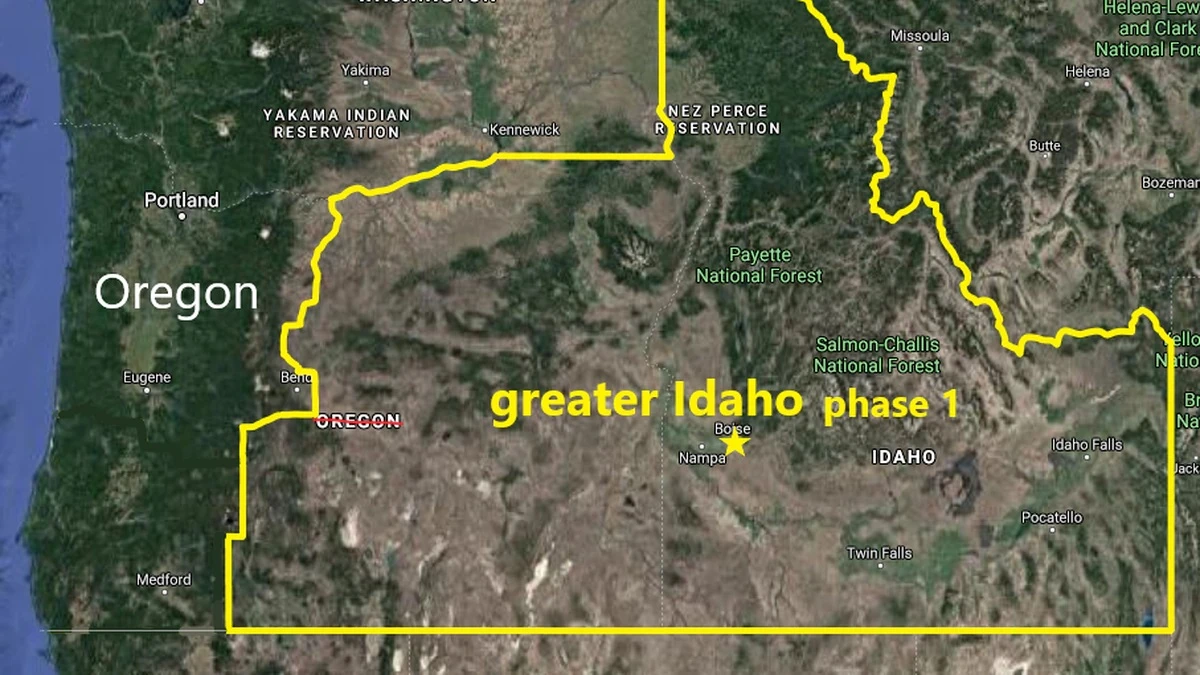
Give an overview of the movement for a ‘Greater Idaho’.
The movement for a “Greater Idaho” aims to expand the borders of the US state of Idaho to include parts of eastern Oregon, northern California, and southeastern Washington. The movement argues that these areas are culturally and politically aligned with Idaho and would benefit from being part of the state.
The idea for a Greater Idaho originated in 2018 with a Facebook group called “Move Oregon’s Border for a Greater Idaho.” Since then, the movement has gained some momentum, with several counties in Oregon and California passing resolutions in support of the idea.
Proponents of Greater Idaho argue that the areas they seek to include are rural and conservative, while the urban areas of Oregon and California are more liberal. They believe that these areas would be better served by the policies and governance of Idaho.
Opponents argue that the movement is unrealistic and would be difficult to implement, as it would require approval from the legislatures of all three states involved, as well as the US Congress. They also argue that the movement is driven by political ideology rather than practical concerns.
Overall, the movement for a Greater Idaho remains a controversial and divisive issue, with supporters and opponents holding firmly to their beliefs.
Elaborate on how the movement is unrealistic and would be difficult to implement, according to its opponents.
Opponents of the Greater Idaho movement argue that the idea is unrealistic and would be difficult to implement for several reasons.
Firstly, the movement would require the approval of the legislatures of all three states involved, as well as the US Congress, which could prove to be a significant obstacle. The likelihood of all these entities agreeing to the proposal is seen as highly unlikely by many opponents.
Secondly, the movement would require the consent of the residents of the affected areas, which may not be easy to obtain. There are concerns that residents of these areas may not want to become part of Idaho, especially since they have historically been part of other states and may identify with those states culturally and politically.
Thirdly, the logistics of integrating the affected areas into Idaho would be complex and costly. There would be numerous issues to address, including infrastructure, public services, and taxation, which would need to be addressed before any change in borders could occur.
Fourthly, the movement may be seen as driven more by political ideology than practical concerns. Opponents argue that the proponents of the Greater Idaho movement are seeking to create a more conservative political environment, rather than addressing genuine issues related to governance and public service delivery.
Overall, opponents of the Greater Idaho movement argue that the idea is unrealistic and would be difficult to implement, with many practical and logistical challenges to overcome.
What would be five defining characteristics of Greater Idaho relative to other states in the country?
It is important to note that the concept of Greater Idaho is still a hypothetical scenario and has not yet been implemented, so defining characteristics are based on the proposed borders and ideology of the movement. With that in mind, here are five defining characteristics that Greater Idaho could have relative to other states in the country:
- Large rural areas: Greater Idaho would likely have a significant rural population, with small towns and agricultural communities scattered across the state.
- Conservative political ideology: The Greater Idaho movement is largely driven by conservative political ideology, and if implemented, the state could be known for its conservative policies and beliefs.
- Outdoor recreation: Idaho is already known for its natural beauty and outdoor recreation opportunities, and the proposed borders of Greater Idaho would encompass several areas that offer hiking, skiing, and other outdoor activities.
- Resource-based economy: The proposed borders of Greater Idaho would encompass areas rich in natural resources, including timber, minerals, and farmland. This could make the state’s economy heavily reliant on resource extraction and agriculture.
- Potential demographic shifts: If the Greater Idaho movement were to succeed, it could lead to demographic shifts in the state, with new residents moving in from areas currently in Oregon and California. This could have implications for the state’s culture, politics, and economy.
Elaborate on the conservative political ideology. Is there a common belief that liberal policies are detrimental for many of the rural residents in this wide area?
The Greater Idaho movement is largely driven by a conservative political ideology that values limited government, individual freedom, and traditional social values. The proponents of the movement argue that the current political climate in Oregon, California, and Washington does not represent the values of many rural residents in the proposed Greater Idaho region.
One of the key beliefs of many supporters of the Greater Idaho movement is that liberal policies are detrimental to many rural residents in the proposed region. They argue that policies related to taxes, regulations, and social issues are designed to benefit urban areas at the expense of rural communities.
For example, some proponents of the movement argue that the high taxes in California and Oregon are burdensome for rural residents, who may not have access to the same level of public services as urban areas. They also argue that regulations related to land use, resource extraction, and environmental protection make it difficult for rural residents to make a living.
On social issues, supporters of the Greater Idaho movement tend to take conservative positions. They may be opposed to abortion, LGBTQ rights, and gun control, which are often more liberal positions in the urban areas of Oregon, California, and Washington.
Overall, proponents of the Greater Idaho movement see conservative policies as more aligned with the needs and values of many rural residents in the proposed region. They believe that by creating a new state that is more representative of these values, residents would be better served by the policies and governance of the state.
However, it is important to note that these beliefs are not universally held by all residents of the proposed Greater Idaho region, and there is significant opposition to the movement as well.
Elaborate on the resource-based economy for Greater Idaho.
The proposed borders of Greater Idaho would encompass several areas rich in natural resources, including timber, minerals, and farmland. As a result, a resource-based economy would likely be a defining characteristic of the state if the Greater Idaho movement were to succeed.
One of the primary industries in Greater Idaho would likely be forestry, given the significant forested areas in the region. The state could produce lumber and paper products, as well as other forest-based products such as furniture and building materials. The mining industry would also be significant in the region, with potential resources including gold, silver, copper, and other minerals.
Agriculture would also be a key part of the Greater Idaho economy, with the state producing crops such as wheat, potatoes, sugar beets, and hay. The region would also be well-suited for livestock production, including cattle, sheep, and hogs.
The resource-based economy of Greater Idaho could potentially provide significant employment opportunities for residents in the state, particularly in rural areas. However, it is important to note that resource extraction and agriculture can also have negative environmental impacts, and balancing economic development with environmental sustainability would be an important consideration for the state.
Additionally, the reliance on natural resources for the economy could make Greater Idaho more susceptible to fluctuations in commodity prices and changes in demand. As a result, economic diversification efforts may be necessary to ensure long-term stability and growth for the state.
What would the demographic shifts be for Greater Idaho? Is there speculation that it would draw many White conservatives to the state?
If the Greater Idaho movement were to succeed, it could potentially lead to demographic shifts in the region. The proposed borders of Greater Idaho would encompass several areas that are currently part of Oregon and California, and it is possible that some residents from these states may choose to move to Greater Idaho if it becomes a new state.
Additionally, there may be some residents of Washington who support the Greater Idaho movement and choose to relocate to the new state if it is created.
It is difficult to predict exactly how the demographics of Greater Idaho would shift, but there is some speculation that the state could attract White conservatives who are seeking a more rural, conservative environment. This is because the Greater Idaho movement is largely driven by conservative political ideology, and many of the areas in the proposed region are currently more liberal.
However, it is important to note that not all residents of the proposed Greater Idaho region support the movement, and there may be significant opposition to the creation of a new state. Additionally, the demographics of the region are already diverse, and any significant demographic shifts would likely take time to occur.
Overall, it is difficult to predict exactly how the demographics of Greater Idaho would shift if it were to become a new state. However, the proposed borders of the state would encompass areas that are currently part of other states, and it is possible that some residents may choose to relocate to Greater Idaho if it is created.
How would Greater Idaho’s stance on gun control, abortion, and taxes differ from Washington State and Oregon in particular?
The Greater Idaho movement is largely driven by a conservative political ideology that values limited government, individual freedom, and traditional social values. As a result, if Greater Idaho were to become a new state, its stance on gun control, abortion, and taxes would likely differ from Washington State and Oregon in particular.
On gun control, Greater Idaho would likely have more permissive laws than Washington State and Oregon, which both have relatively strict gun control laws. Proponents of the Greater Idaho movement tend to take a conservative stance on gun rights, and would likely seek to protect Second Amendment rights in the state.
On abortion, Greater Idaho would likely take a more restrictive stance than Washington State and Oregon. Proponents of the Greater Idaho movement tend to take a conservative stance on social issues, and many are opposed to abortion rights. It is possible that Greater Idaho could seek to enact more restrictive abortion laws than are currently in place in Washington State and Oregon.
On taxes, Greater Idaho would likely have a different approach than both Washington State and Oregon. Proponents of the Greater Idaho movement argue that high taxes in Oregon and California are burdensome for rural residents and may make it difficult for businesses to thrive.
As a result, Greater Idaho would likely seek to have a more business-friendly tax policy than these states. However, it is important to note that the specifics of any tax policy would depend on the leadership and legislative priorities of the state if it were to be created.
Overall, if Greater Idaho were to become a new state, its stance on gun control, abortion, and taxes would likely differ from those of Washington State and Oregon. The state would likely take a more conservative stance on these issues, reflecting the political beliefs of many supporters of the Greater Idaho movement.
Is the Greater Idaho movement gaining more and more traction over time or is it stalling somewhat?
The Greater Idaho movement has gained some traction over time, but it is still considered a long shot by many observers. The movement has been in existence for several years, but it has not yet gained widespread support or momentum.
One challenge for the Greater Idaho movement is that creating a new state is a difficult and complex process that requires approval from both the state legislatures and the U.S. Congress. Additionally, the movement faces opposition from many residents of the areas that would be excluded from Greater Idaho if it were to become a new state.
Despite these challenges, the Greater Idaho movement has gained some support in recent years, particularly in rural areas of Oregon and California. Proponents of the movement argue that residents in these areas are culturally and politically distinct from residents in urban areas, and that they would be better served by being part of a new, more conservative state.
However, it is important to note that the Greater Idaho movement is still relatively small and has not yet gained the support necessary to become a reality. Additionally, even if the movement were to gain more support, it would face significant legal and political obstacles to creating a new state.
As a result, it is difficult to predict whether the Greater Idaho movement will gain more traction over time or whether it will stall.

Leave a Reply